

When it comes to firefighting and ventilation, wheeled gasoline PPV (Positive Pressure Ventilation) fans play a crucial role. As a supplier of these essential pieces of equipment, I often get asked the question: "Is it easy to move a Wheeled Gasoline PPV Fan around?" In this blog post, I'll delve into the factors that affect the mobility of these fans and provide a comprehensive answer.
Design Features for Mobility
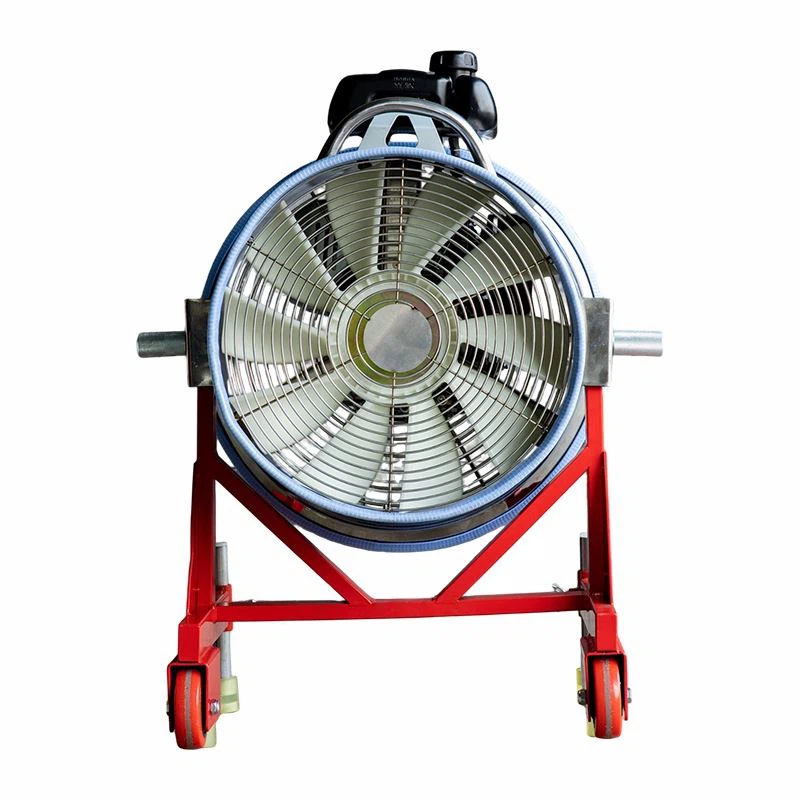
One of the primary aspects that determine the ease of moving a wheeled gasoline PPV fan is its design. Most modern wheeled gasoline PPV fans are engineered with mobility in mind. They typically come equipped with large, sturdy wheels that are designed to handle various terrains. These wheels are often made of durable materials such as rubber or polyurethane, which provide good traction and shock absorption.
The wheels are strategically placed to ensure stability and balance. For example, many fans have a four - wheel configuration, with two larger wheels at the back and two smaller wheels at the front. This setup allows for easy maneuverability, especially when turning corners or navigating tight spaces. Some fans also feature swivel casters at the front, which can be locked in place when the fan needs to be stationary.
In addition to the wheels, the overall weight distribution of the fan is carefully considered. The engine and other heavy components are positioned in a way that keeps the center of gravity low, reducing the risk of tipping over during movement. This is particularly important when the fan is being moved up or down slopes or uneven surfaces.
Weight Considerations
The weight of a wheeled gasoline PPV fan is another significant factor in its mobility. Generally, these fans can range in weight from around 100 kilograms to over 200 kilograms, depending on their size and capacity. While the wheels help to distribute the weight, a heavier fan can still be more challenging to move, especially for a single person.
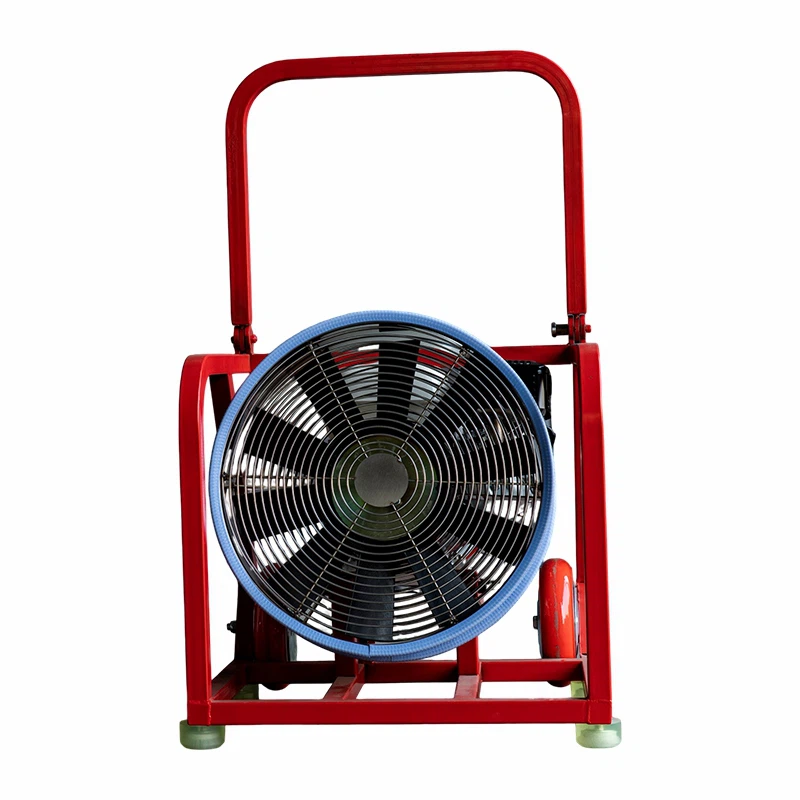
However, many manufacturers have taken steps to reduce the weight of their fans without sacrificing performance. They use lightweight materials such as aluminum for the frame and housing, which can significantly reduce the overall weight. Some fans also feature foldable handles or other design elements that make them easier to carry or lift when necessary.
Terrain and Environment
The ease of moving a wheeled gasoline PPV fan also depends on the terrain and environment in which it is being used. On smooth, flat surfaces such as concrete or asphalt, the fan can be easily rolled around with minimal effort. The large wheels provide good traction, and the fan can be quickly positioned in the desired location.
However, when the terrain becomes more challenging, such as on gravel, grass, or uneven ground, the mobility of the fan can be affected. The wheels may sink into soft surfaces, making it more difficult to push or pull the fan. In some cases, additional effort may be required to lift the fan over obstacles or navigate through rough terrain.
In addition to the physical terrain, the environment can also play a role. For example, in a confined space such as a narrow hallway or a small room, it may be more difficult to maneuver the fan due to limited space. In these situations, the fan's size and shape become important factors, and a smaller, more compact fan may be more suitable.
User Experience and Training
The ease of moving a wheeled gasoline PPV fan also depends on the user's experience and training. A person who is familiar with handling heavy equipment and has received proper training on how to move and operate the fan will likely find it easier to move the fan around.
Training should include instructions on how to properly grip the handles, how to balance the fan during movement, and how to navigate different terrains. It is also important for users to understand the limitations of the fan and to take appropriate safety precautions when moving it.
Applications and Mobility Requirements
The specific applications of the wheeled gasoline PPV fan can also influence its mobility requirements. For example, in a firefighting scenario, the fan may need to be quickly moved from one location to another to provide ventilation in different areas of a building. In this case, the fan's mobility is crucial, and a lightweight and easily maneuverable fan may be preferred.
On the other hand, in an industrial setting where the fan is used for long - term ventilation in a fixed location, mobility may not be as critical. However, even in these situations, the ability to move the fan for maintenance or repositioning purposes can still be beneficial.
Conclusion
In conclusion, while moving a wheeled gasoline PPV fan can present some challenges, modern design features and engineering have made it relatively easy in many situations. The large, sturdy wheels, careful weight distribution, and lightweight materials all contribute to the fan's mobility. However, factors such as the weight of the fan, the terrain and environment, the user's experience and training, and the specific applications of the fan can all affect how easily it can be moved.
If you are in the market for a wheeled gasoline PPV fan, it is important to consider these factors to ensure that you choose a fan that meets your mobility requirements. Whether you are a firefighter, an industrial worker, or someone in need of ventilation equipment, a well - designed and easy - to - move fan can make a significant difference in your operations.
If you are interested in learning more about our wheeled gasoline PPV fans or other related products such as Positive Pressure Fan Firefighting, Fire Ventilation Fan, and Gasoline Fire Smoke Exhauster, please feel free to contact us to discuss your specific needs and requirements. We are here to provide you with the best solutions for your ventilation challenges.
References
- Manufacturer's product specifications and brochures for wheeled gasoline PPV fans.
- Industry standards and guidelines for firefighting and ventilation equipment.
- User manuals and training materials for operating wheeled gasoline PPV fans.